Why it’s performed
LASIK may be considered to correct refractive errors and reduce reliance on glasses or contact lenses.
Reduce your dependence on glasses with personalised LASIK treatment planning, advanced evaluation, and complete support from consultation to follow-up.

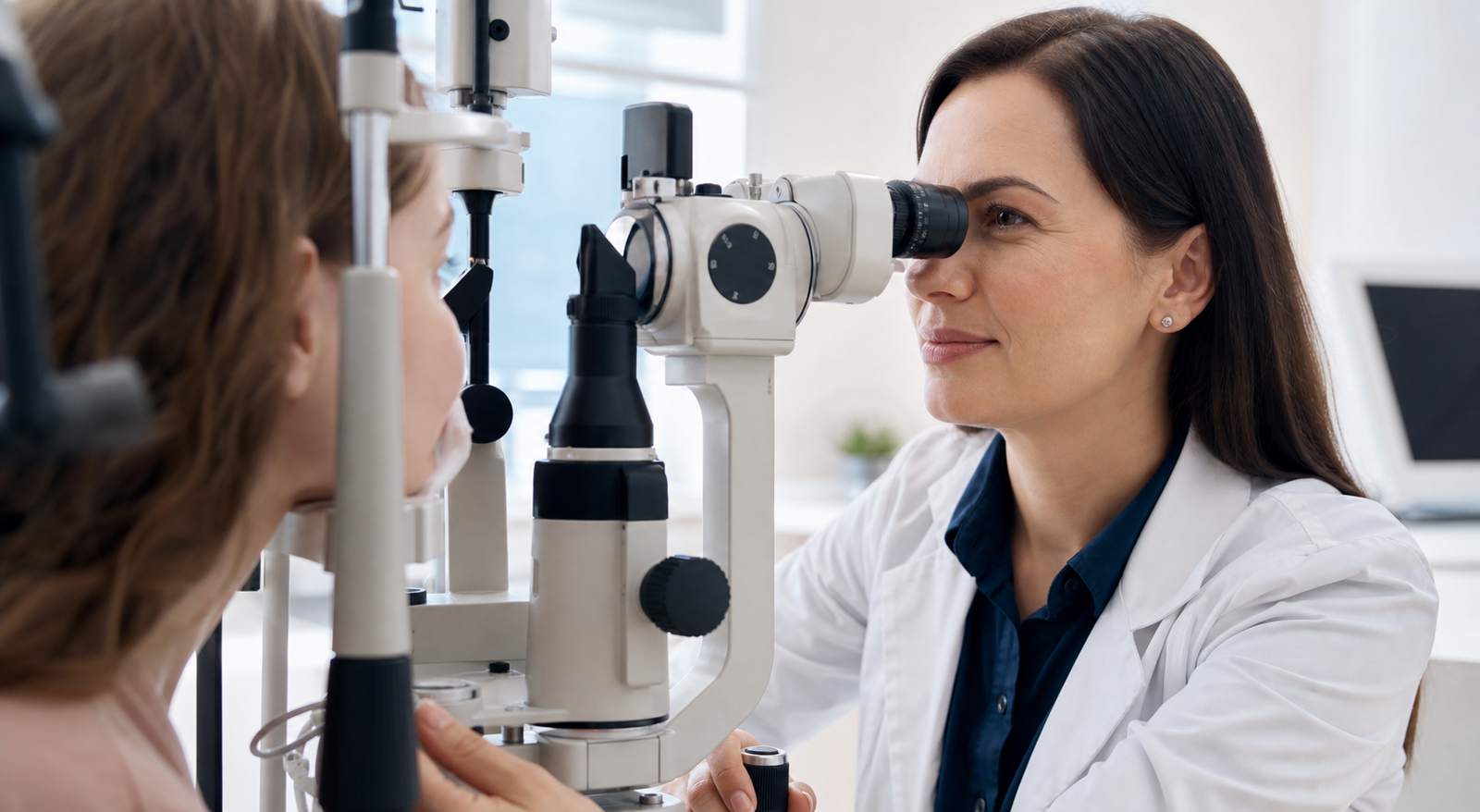
LASIK is a form of laser vision correction that precisely reshapes the cornea—the clear front surface of the eye—to change how light is focused.
It may reduce dependence on glasses or contact lenses for suitable people with common refractive errors. A detailed eye examination is required because the right treatment depends on your prescription, corneal health, medical history and individual expectations.
LASIK may be considered to correct refractive errors and reduce reliance on glasses or contact lenses.
A specialist laser reshapes corneal tissue according to an individual treatment plan developed from your eye measurements.
Suitability depends on adulthood, prescription stability, corneal condition, eye health and relevant medical factors.
Every stage is guided by specialist assessment, clear information and coordinated follow-up—so you know what comes next.
Discuss your vision, prescription history, eye health and expectations with an ophthalmology specialist.
Your specialist reviews the measurements and clinical factors needed to determine whether LASIK may be suitable.
If you choose to proceed, the treatment plan is based on your assessment and explained before the procedure.
Receive aftercare guidance and scheduled clinical reviews to monitor healing and address any concerns.
Your estimated treatment cost depends on your clinical assessment, recommended approach and the care included in your plan.
Tell us how to reach you and our care team can help explain the next step.
A final quotation is provided only after clinical assessment and confirmation of your treatment plan.Different techniques may be considered after your specialist reviews your prescription, corneal measurements, eye health and treatment goals.
A topography-guided LASIK approach that uses detailed corneal mapping to personalise excimer-laser reshaping.
A femtosecond laser creates a small lenticule within the cornea, which is removed through a small incision without creating a flap.
A femtosecond-laser lenticule procedure designed to reshape the cornea through a small incision without creating a corneal flap.
No single approach is right for everyone. Your ophthalmology specialist should explain why a particular option is—or is not—appropriate for your eyes.
Discuss your options
We help connect the people, information and next steps involved in your treatment—so your care feels easier to understand and navigate.
Connect with ophthalmology expertise suited to your assessment and treatment needs.
Bring specialist consultation and required eye investigations into one clearer journey.
Understand your recommended approach, care inclusions and next steps before proceeding.
Keep reviews, recovery guidance and care-team communication better organised.
Your specialist will give you instructions based on your eyes and procedure. Surgitrix helps keep reviews, guidance and follow-up steps better coordinated.
Arrange transport home, use prescribed eye drops as directed and avoid rubbing or placing pressure on your eyes.
Attend your early review and follow your specialist's advice on screens, driving, work, exercise and washing around the eyes.
Keep using medication for the prescribed period and wait for clinical clearance before swimming, contact sport or strenuous activity.
Complete scheduled follow-ups and contact your care team promptly if symptoms change or you have concerns about your recovery.
These answers provide general guidance. Your ophthalmology specialist will confirm what applies to you after assessing your eyes, prescription and health history.
Our care team can help you understand the consultation process.
Suitability depends on factors including your prescription, corneal measurements, eye health, age and medical history. A specialist assessment and diagnostic tests are required before LASIK can be recommended.
Numbing eye drops are generally used during treatment. Some people experience pressure, watering, grittiness or temporary discomfort afterward; your specialist will explain what to expect and how symptoms are managed.
The laser treatment itself is usually brief, but additional time is needed for preparation and immediate post-procedure checks. Your clinic will provide the full appointment schedule.
Recovery varies. Many routine activities may resume relatively quickly, but you should not drive until your specialist confirms your vision meets the required standard. Follow the personalised advice given at your review.
LASIK aims to reduce dependence on glasses or contact lenses, but it cannot guarantee complete independence. Vision can also change with age, and some people may still need glasses for particular tasks.
Possible effects can include dryness, glare, halos, fluctuating vision, infection or under- or over-correction. Your ophthalmology specialist should discuss benefits, limitations and risks specific to your eyes before consent.
Tell us what you need and the Surgitrix care team will help coordinate your consultation, suitability assessment and next steps.
Specialist-led careAssessment by ophthalmology professionals.
One coordinated journeyClearer steps from consultation to recovery.
Support after treatmentFollow-up guidance when you need it.